Tips for Introducing Bodily Autonomy, Consent, & Healthy Sexuality to Toddlers and Babies
I’m a firm believer that parents and families are our kids’ first and primary sexuality educators. Especially in this time when federal comprehensive sex education funding is getting slashed and there’s no guarantee your school-aged child in North Carolina will get any sex ed at all at school, family conversations about sexual health are more important than ever.
So how early can you start?
Earlier than you think!
Many parents think of the single, awkward “birds and the bees” talk when they consider talking to their child(ren) about sex. Perhaps that’s all you got when you were growing up! But research shows that scaffolding conversations about sexual health, starting at younger ages, can help prevent child sexual abuse and lead to healthier sexual relationships in the future. So think of the “sex talk” as actually many little talks that can begin as early as you want with developmentally appropriate information. Providing our babies and toddlers with some foundational knowledge about core concepts like consent, body literacy, and diversity can go a long way to make the actual preteen/teen sex talk way less awkward and way more effective.
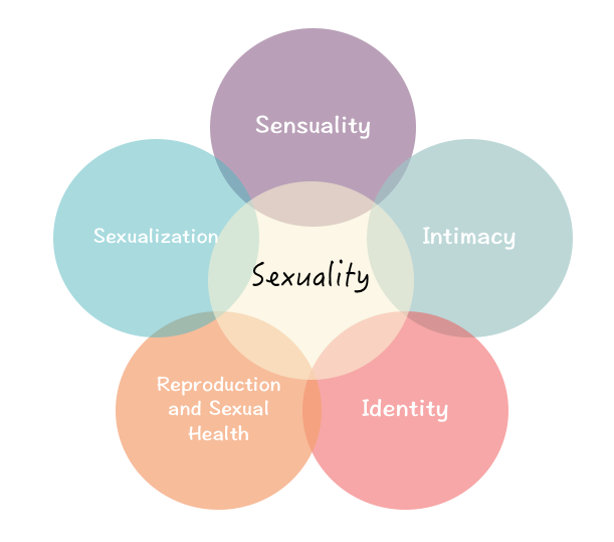
Sexuality actually includes a lot more than just intercourse! We can introduce many of these topics in an age-appropriate way when our children are babies and toddlers to set them up for healthy relationships with their bodies and their peers. Learn more about the model here.
As a mom of a newborn and 2.5 year old and a professional sexuality educator, here are some topics I’ve already brought up with my kiddos. Check them out to see if any resonate with you!
Naming Body Parts
I actually do this with my newborn! As soon as our babies are born, they have body parts–including sexual/reproductive body parts. As they are learning to move their bodies and form language, we can help them by using the anatomical words for all of their body parts. When they wiggle their hands, we can say, “Look at those amazing hands!” When we wipe their bottoms, we can say, “I’m wiping your vulva!” When we clean them in the bath, we can say, “Here are your penis and your scrotum!” When they stare at us with those huge baby eyes, we can say, “Look at those beautiful eyes!”
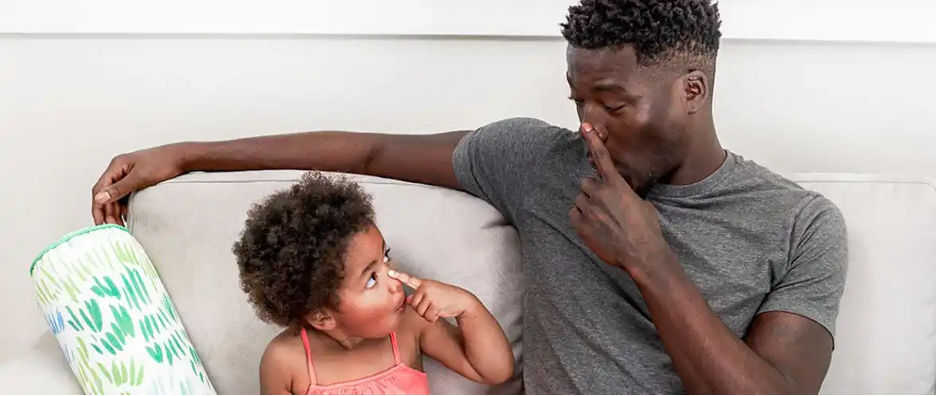
From Lovevery.
We don’t need to shy away from teaching terms for sexual/reproductive body parts; in fact, naming them alongside other body parts can help normalize them, reduce the likelihood of developing shame around them, and help prevent child sexual abuse. (Think about it: As soon as children can form words, they can use those words to tell a safe adult when someone is touching those body parts. If they say “Somebody touched my cookie at school,” you may miss a potential child abuse situation–”cookie” is a slang term for vulva in some families.)
It’s also really common for young babies and children to touch their own genitals. This is developmentally normal, and for me and my partner, it was something we didn’t want to discourage. We don’t want our kids to grow up with shame around touching their body, and as a sexuality educator, I knew that masturbation can actually promote body literacy and lend to more satisfying sexual lives later in life. So whenever our children touch their genitals at home, we either don’t say anything at all or say, in a very neutral tone, “oh, you’re touching your penis.” (See the section on “Public vs Private” below to continue this conversation!)
Consent Before Touching
I started this with my babies as well! You might be wondering, how do you ask consent from a preverbal baby? I introduced the concept early by telling my babies whenever I clean their chests or genitals that I am doing so. I will say, “Ok, I’m wiping your vulva now!” or “I’m cleaning your anus!” I don’t do it every single time I change a diaper–I’m thinking particularly about those times when I’ve got a screaming baby on the changing table, demanding to be fed–but I do it often enough that it’s now become a habit with my toddler’s diaper changes and baths.
When your kiddo starts being able to offer hugs and kisses, you can begin truly asking for and respecting their consent. You can offer choices: “Would you like to kiss Daddy goodnight or give him a high five?” or ask before touching: “Can I give you a hug?” This modeling can help teach the language and practice of consent to our under-2-year-olds.
Respect the “No”
Be warned: there will be a (heartbreaking) time when your little cutie will begin asserting her independence and say “No, Mommy!” to many of your bids for kisses and hugs. It’s important to RESPECT that. I found it really hard to move from kissing my cute little baby all the time to refraining from kissing my cute little toddler when he started being able to have a choice in the matter.
But we had language for this already. Whenever we tickle our toddler–or swing him around or give him big squishes to get the wiggles out–we stop immediately when he says “no” or “stop.” We say, “I respect your ‘no.’” Then we ask if he wants more or if he’s had enough.

From The Washington Post.
I’ve also offered the language, “It’s your body, so it’s your choice” and model it myself. When my toddler demands that I play with him on the floor but only sit in that specific spot (“No, mommy! Come here!”), I often will say, “I’m ok sitting right where I am. I get to choose what I do with my body.” This kind of language can support an early understanding of bodily autonomy.
Identifying Safe Adults
As soon as my toddler was verbal enough (around 2-ish I’d say), we started introducing the concept of grown-ups vs kids and then establishing safe grown-ups. So we’d ask him, “Who can you go to for help?” and he’d name “Daddy, Grandma, Mommy” (in that order because of course I’m chopped liver these days). We keep reinforcing that every so often, which can help for preventing and responding to situations of sexual abuse.
Public vs. Private
You can expand the safe adult conversation by introducing public vs private spaces. I just started introducing public vs private to my 2.5 year old, although we technically started even earlier; we have a “clothes have to be worn outside the house” rule that we had to start to get him to put clothes on ever. Already he has a sense that something is different about being inside the house vs outside the house in terms of how he presents his body.
During bath time one day around when he turned 2.5, I introduced a song about Private Parts that went viral on TikTok. This helped introduce the idea that some of his body parts are different than others; some of his body parts should only be shown and/or touched in private. After singing the song, we had a brief (as in 2-3 sentences) conversation about who can touch his private parts and when. It generally was along the lines of, “Mommy and Daddy touch your private parts in the shower/bath to keep them clean. [These safe grown-ups] touch your bottom to wipe your butt after you poop/pee. Your doctor touches your private parts at the doctor’s office to make sure they’re healthy. If you ever don’t feel comfortable, tell Mommy/Daddy/other safe adult.” I don’t think he understands that last part yet (about not feeling comfortable) but with reinforcement over the years, I think it will begin to make more sense.

From tiktok.
Exploring Gender
This sexuality concept starts as early as finding out the sex of the baby–what clothes you’re going to buy, what toys you’ll offer, what pronouns you’ll use for your baby. We’ve opted for a “gender-lite” approach, in which we dress our kiddos in mostly gender neutral outfits and use more gender neutral words like “kid” instead of “girl/boy” while still following some gendered concepts like boy’s haircuts, for example. I believe strongly in allowing my children to explore gender, pursue things that interest them, and not shut down anything because “that’s only what girls wear.” This is a highly sensitive and personal topic, however, and I encourage you to do what feels best for your family! But I will say from a sexuality educator perspective, I have not found a need to introduce gender concepts like girl/boy/man/woman at this point. My toddler knows that some people have a penis and some people have a vulva but he doesn’t associate those with any gender at this point. I’d love for my kids to continue to explore and try things out at this age.
Exploring Diversity
I think it’s also really important to start discussing sexual diversity from a young age, with an emphasis on respect and the value of all humans. This helps prime conversations about gender, sexual orientation, and sexual diversity that we’ll have later on. I often recommend using books that showcase a wide variety of bodies and families to introduce the basic concepts that we’re all unique (our bodies and our families) and diversity is wonderful. Some of our favorite books have been Bodies are Cool by Tyler Feder, Families Can by Dan Saks, and Your Whole Body: From Your Head to Your Toes, and Everything in Between! By Lizzie DeYoung Charbonneau. I also like the Being YOU series but found them to be a little too advanced for now. I’ll probably wait til preschool/kindergarten (maybe later?) before really pulling out the vocabulary.
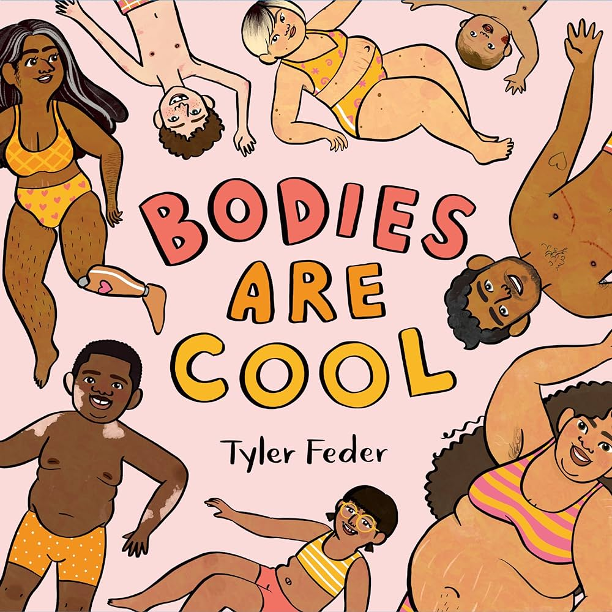
My favorite book that celebrates body diversity!
I hope this helps! For all things healthy sexuality, be sure to also check out my favorite resource, Sex Positive Families, which has a resource list full of books, games, and media you can curate by age, type, and topic.