womxn • history • sex • education • social justice
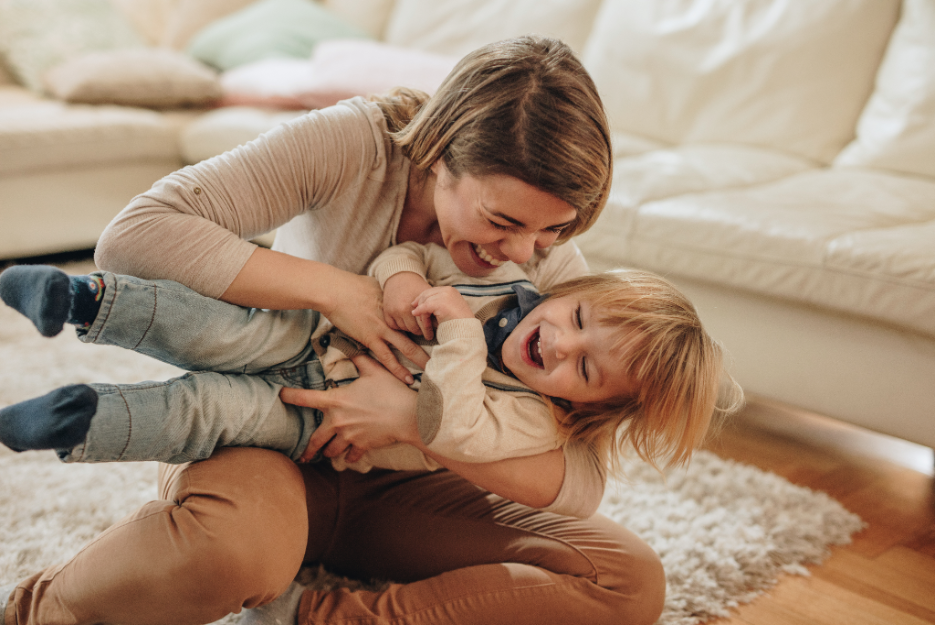
Tips for Introducing Bodily Autonomy, Consent, & Healthy Sexuality to Toddlers and Babies
I’m a firm believer that parents and families are our kids’ first and primary sexuality educators. Especially in this time when federal comprehensive sex education funding is getting slashed and there’s no guarantee your school-aged child in North Carolina will get any sex ed at all at school, family conversations about sexual health are more important than ever.
So how early can you start?
Earlier than you think!
I’m a firm believer that parents and families are our kids’ first and primary sexuality educators. Especially in this time when federal comprehensive sex education funding is getting slashed and there’s no guarantee your school-aged child in North Carolina will get any sex ed at all at school, family conversations about sexual health are more important than ever.
So how early can you start?
Earlier than you think!
Many parents think of the single, awkward “birds and the bees” talk when they consider talking to their child(ren) about sex. Perhaps that’s all you got when you were growing up! But research shows that scaffolding conversations about sexual health, starting at younger ages, can help prevent child sexual abuse and lead to healthier sexual relationships in the future. So think of the “sex talk” as actually many little talks that can begin as early as you want with developmentally appropriate information. Providing our babies and toddlers with some foundational knowledge about core concepts like consent, body literacy, and diversity can go a long way to make the actual preteen/teen sex talk way less awkward and way more effective.
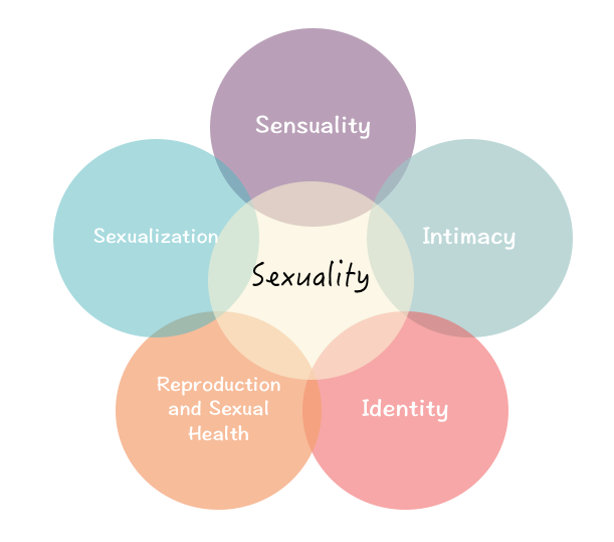
Sexuality actually includes a lot more than just intercourse! We can introduce many of these topics in an age-appropriate way when our children are babies and toddlers to set them up for healthy relationships with their bodies and their peers. Learn more about the model here.
As a mom of a newborn and 2.5 year old and a professional sexuality educator, here are some topics I’ve already brought up with my kiddos. Check them out to see if any resonate with you!
Naming Body Parts
I actually do this with my newborn! As soon as our babies are born, they have body parts–including sexual/reproductive body parts. As they are learning to move their bodies and form language, we can help them by using the anatomical words for all of their body parts. When they wiggle their hands, we can say, “Look at those amazing hands!” When we wipe their bottoms, we can say, “I’m wiping your vulva!” When we clean them in the bath, we can say, “Here are your penis and your scrotum!” When they stare at us with those huge baby eyes, we can say, “Look at those beautiful eyes!”
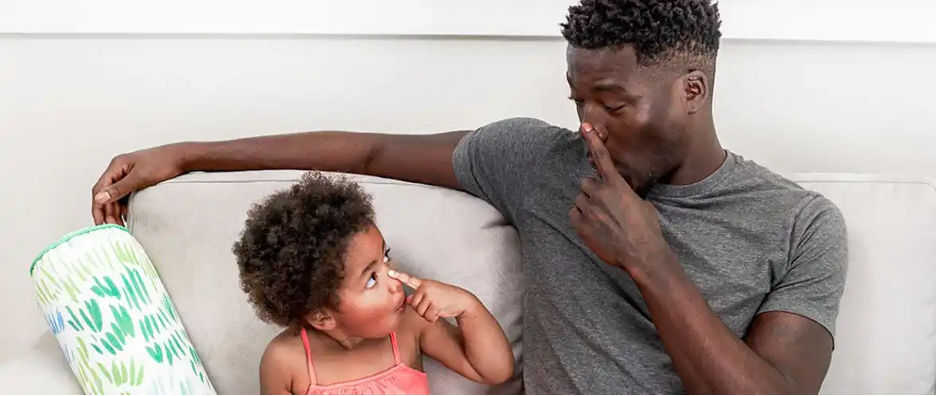
From Lovevery.
We don’t need to shy away from teaching terms for sexual/reproductive body parts; in fact, naming them alongside other body parts can help normalize them, reduce the likelihood of developing shame around them, and help prevent child sexual abuse. (Think about it: As soon as children can form words, they can use those words to tell a safe adult when someone is touching those body parts. If they say “Somebody touched my cookie at school,” you may miss a potential child abuse situation–”cookie” is a slang term for vulva in some families.)
It’s also really common for young babies and children to touch their own genitals. This is developmentally normal, and for me and my partner, it was something we didn’t want to discourage. We don’t want our kids to grow up with shame around touching their body, and as a sexuality educator, I knew that masturbation can actually promote body literacy and lend to more satisfying sexual lives later in life. So whenever our children touch their genitals at home, we either don’t say anything at all or say, in a very neutral tone, “oh, you’re touching your penis.” (See the section on “Public vs Private” below to continue this conversation!)
Consent Before Touching
I started this with my babies as well! You might be wondering, how do you ask consent from a preverbal baby? I introduced the concept early by telling my babies whenever I clean their chests or genitals that I am doing so. I will say, “Ok, I’m wiping your vulva now!” or “I’m cleaning your anus!” I don’t do it every single time I change a diaper–I’m thinking particularly about those times when I’ve got a screaming baby on the changing table, demanding to be fed–but I do it often enough that it’s now become a habit with my toddler’s diaper changes and baths.
When your kiddo starts being able to offer hugs and kisses, you can begin truly asking for and respecting their consent. You can offer choices: “Would you like to kiss Daddy goodnight or give him a high five?” or ask before touching: “Can I give you a hug?” This modeling can help teach the language and practice of consent to our under-2-year-olds.
Respect the “No”
Be warned: there will be a (heartbreaking) time when your little cutie will begin asserting her independence and say “No, Mommy!” to many of your bids for kisses and hugs. It’s important to RESPECT that. I found it really hard to move from kissing my cute little baby all the time to refraining from kissing my cute little toddler when he started being able to have a choice in the matter.
But we had language for this already. Whenever we tickle our toddler–or swing him around or give him big squishes to get the wiggles out–we stop immediately when he says “no” or “stop.” We say, “I respect your ‘no.’” Then we ask if he wants more or if he’s had enough.
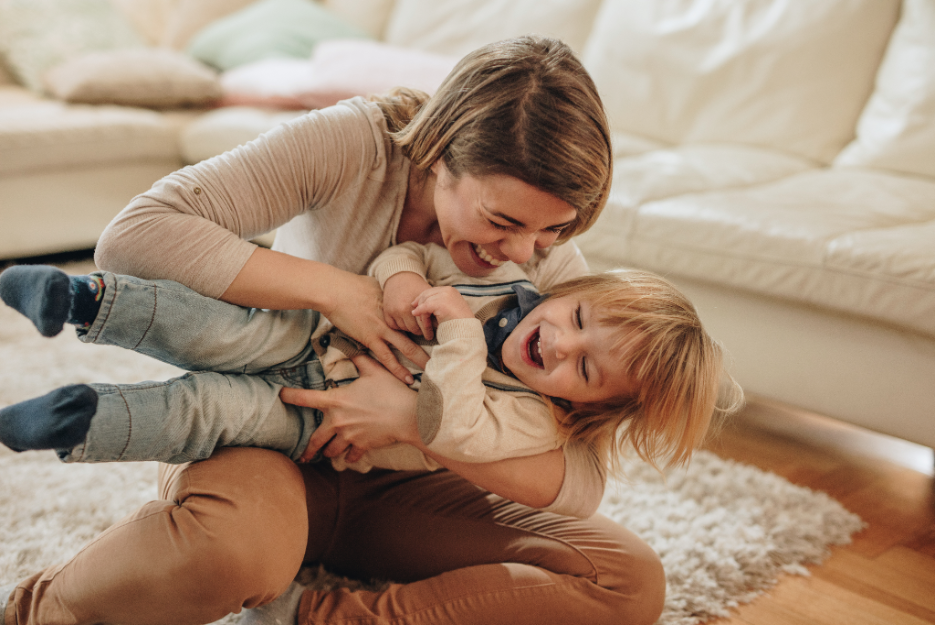
From The Washington Post.
I’ve also offered the language, “It’s your body, so it’s your choice” and model it myself. When my toddler demands that I play with him on the floor but only sit in that specific spot (“No, mommy! Come here!”), I often will say, “I’m ok sitting right where I am. I get to choose what I do with my body.” This kind of language can support an early understanding of bodily autonomy.
Identifying Safe Adults
As soon as my toddler was verbal enough (around 2-ish I’d say), we started introducing the concept of grown-ups vs kids and then establishing safe grown-ups. So we’d ask him, “Who can you go to for help?” and he’d name “Daddy, Grandma, Mommy” (in that order because of course I’m chopped liver these days). We keep reinforcing that every so often, which can help for preventing and responding to situations of sexual abuse.
Public vs. Private
You can expand the safe adult conversation by introducing public vs private spaces. I just started introducing public vs private to my 2.5 year old, although we technically started even earlier; we have a “clothes have to be worn outside the house” rule that we had to start to get him to put clothes on ever. Already he has a sense that something is different about being inside the house vs outside the house in terms of how he presents his body.
During bath time one day around when he turned 2.5, I introduced a song about Private Parts that went viral on TikTok. This helped introduce the idea that some of his body parts are different than others; some of his body parts should only be shown and/or touched in private. After singing the song, we had a brief (as in 2-3 sentences) conversation about who can touch his private parts and when. It generally was along the lines of, “Mommy and Daddy touch your private parts in the shower/bath to keep them clean. [These safe grown-ups] touch your bottom to wipe your butt after you poop/pee. Your doctor touches your private parts at the doctor’s office to make sure they’re healthy. If you ever don’t feel comfortable, tell Mommy/Daddy/other safe adult.” I don’t think he understands that last part yet (about not feeling comfortable) but with reinforcement over the years, I think it will begin to make more sense.
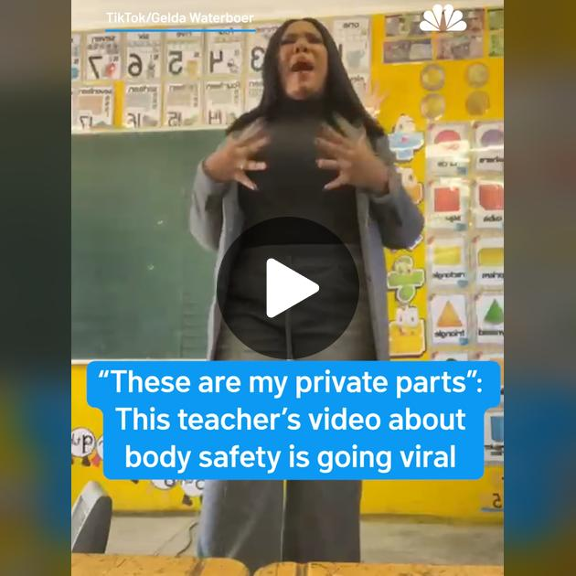
From tiktok.
Exploring Gender
This sexuality concept starts as early as finding out the sex of the baby–what clothes you’re going to buy, what toys you’ll offer, what pronouns you’ll use for your baby. We’ve opted for a “gender-lite” approach, in which we dress our kiddos in mostly gender neutral outfits and use more gender neutral words like “kid” instead of “girl/boy” while still following some gendered concepts like boy’s haircuts, for example. I believe strongly in allowing my children to explore gender, pursue things that interest them, and not shut down anything because “that’s only what girls wear.” This is a highly sensitive and personal topic, however, and I encourage you to do what feels best for your family! But I will say from a sexuality educator perspective, I have not found a need to introduce gender concepts like girl/boy/man/woman at this point. My toddler knows that some people have a penis and some people have a vulva but he doesn’t associate those with any gender at this point. I’d love for my kids to continue to explore and try things out at this age.
Exploring Diversity
I think it’s also really important to start discussing sexual diversity from a young age, with an emphasis on respect and the value of all humans. This helps prime conversations about gender, sexual orientation, and sexual diversity that we’ll have later on. I often recommend using books that showcase a wide variety of bodies and families to introduce the basic concepts that we’re all unique (our bodies and our families) and diversity is wonderful. Some of our favorite books have been Bodies are Cool by Tyler Feder, Families Can by Dan Saks, and Your Whole Body: From Your Head to Your Toes, and Everything in Between! By Lizzie DeYoung Charbonneau. I also like the Being YOU series but found them to be a little too advanced for now. I’ll probably wait til preschool/kindergarten (maybe later?) before really pulling out the vocabulary.
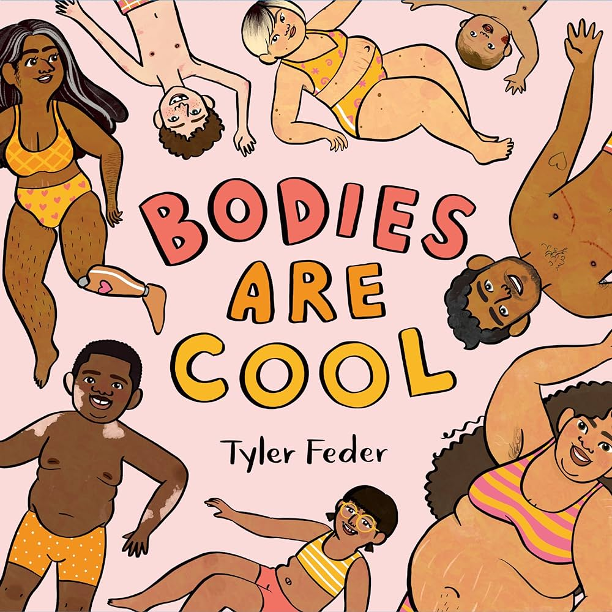
My favorite book that celebrates body diversity!
I hope this helps! For all things healthy sexuality, be sure to also check out my favorite resource, Sex Positive Families, which has a resource list full of books, games, and media you can curate by age, type, and topic.
Porn: What am I seeing??
I’ve been writing posts for our youth empowerment blog with my job at the Compass Center. I wanted to share them here as well. Porn is pretty accessible today for young people and adults alike. However, porn has been made for entertainment, not for education. Check out this post for tips on understanding the dynamics within porn.

12 Common Teen Questions about Sex & Sexuality
I’ve been writing posts for our youth empowerment blog with my job at the Compass Center. I wanted to share them here as well.
Ever wonder what sexuality issues are on the top of youths’ minds today? Check out these 12 common questions from teens and maybe learn something yourself!

Trans Sex Ed: What You Need to Know
I’ve been writing posts for our youth empowerment blog with my job at the Compass Center. I wanted to share them here as well. In this post, I explore trans sex education, which sadly is too often omitted from sex education spaces. Get some tips about sexual health considerations for trans folks.

Vulva vs. Vagina: What the Research Says You Need to Know
In the US, talking about our sexual anatomy is pretty darn taboo. We teach our kids to use words like “cookie”, “ding-a-ling”, and “private parts” and tend to avoid providing our kids with the specific terms like vulva, penis, and genitals.

Viva La Vulva II by Silvia de Bejar
In the US, talking about our sexual anatomy is pretty darn taboo. We teach our kids to use words like “cookie”, “ding-a-ling”, and “private parts” and tend to avoid providing our kids with the specific terms like vulva, penis, and genitals.
Our sex education is also sorely lacking, with only 17 states required to provide medically accurate information about sex and anatomy (1). Additionally, studies have found that educational textbooks fail to cover the clitoris and vulva as much as the penis or only focus on internal anatomy like the uterus, ovaries, and vaginal canal (2).
Folks think it’s inappropriate to show accurate pictures of the vulva and penis to, well, anyone--but especially kids. I wish I could count the number of times I was told as a sexuality educator that the drawing I use to show external anatomy of the vulva, clitoris, and vaginal opening was “too graphic.”
(First image: what I wish I could show students, from the Our Whole Lives curriculum. Second image: what I sometimes end up being allowed to show students.)


So it’s no surprise that as adults, we lack basic vocabulary and understanding of our sexy parts, specifically female* ones.
There’s research to prove this. A study from 2013 found that 80% of male college students and 62% of female college students were unable to locate the vagina correctly (3). 62% of female college kids can’t find the vagina?! Where do they think their period blood has been coming from?!
Another interesting study suggested that many women do not know what exactly the vulva describes and what is considered “normal” genital anatomy because they have not been exposed to a diverse range of normal genitalia (4). This is a huge issue when we’re trying to figure out what ours look like and if we should be embarrassed about them or not. (Hint: you should NEVER feel embarrassed about your sexy parts! Variety is normal!)
And there is some indication in a number of other studies that race and class may impact our knowledge of sexual anatomy, with low income individuals of color scoring lower on sexual anatomy knowledge and understanding than white individuals (5). Which is just extra bad (i.e. scary, infuriating, racist, classist, oppressive…) because everyone deserves to be represented and to know that their bodies (and their sexy parts!) are great.
So on the whole, the research points to a general lack of understanding of specifically female* genital anatomy and a confusion about what’s normal.
So let’s clear it up a bit.
One particular wisdom nugget that has been lacking in our public understanding is the difference between the vulva and the vagina.
What’s a vulva, you ask?
The word “vulva” isn’t often included in our anatomy lessons even though it’s pretty much THE term to describe the private parts of about half of the world’s population.
The vulva describes the area containing the labia, clitoris, vaginal opening, and urethra. The vagina is the canal that is mostly on the inside of the body and that connects the vaginal opening to the uterus. The vaginal opening is the only part of the vagina we see from the outside.

The vulva is the whole bit, the vagina is the internal canal leading to the uterus. We can only see the vaginal opening from the outside. (Source: Lady Suite)
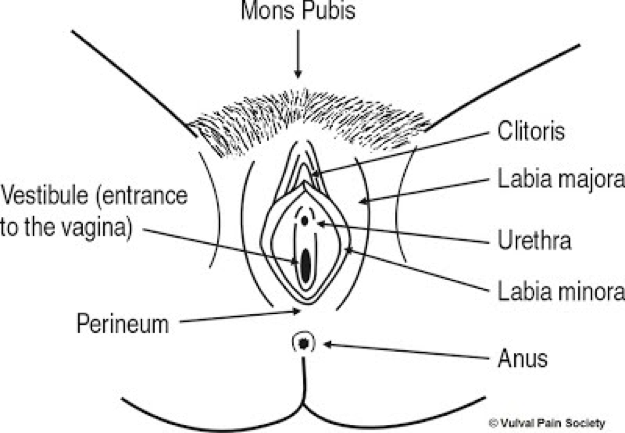
To brush up on your general sexual anatomy knowledge, check out this great resource page from Planned Parenthood: https://www.plannedparenthood.org/learn/health-and-wellness/sexual-and-reproductive-anatomy/what-are-parts-female-sexual-anatomy (Source: Vulval Pain Society)
The TV show Big Mouth does a great job explaining the difference and walking you through the different parts of the vulva, with a cute vulva friend as your guide:

The other aspect that is sorely lacking is diversity of vulvas. Because of anatomy textbooks and porn, we imagine all vulvas are white and smooth, with pink lips, no hair, and tiny labia. Not true! Vulvas come in so many shapes, sizes, and colors and it’s a sad thing that we don’t get to see that variety until we’re actually having sexy time with others. It causes folks to think their vulvas are abnormal, smelly, embarrassing… when in reality, they are totally great just how they are!
So I leave you with a great big variety of truly lovely vulvas.
And if you haven’t already, go ahead, take a mirror, and do a little exploring yourself. Or treat your vulva-owning partner to a little tour, with their consent of course.


Image 1: #VULVALUTION by Cult Beauty
Image 2: The Vulva Gallery by Hilde Atalanta
Image 3: Vula art by Vielma.at
Image 4: Vulva art by Vielma.at
Image 5: The Great Wall of Vagina (although it should be called ‘The Great Wall of Vulvas’....) by artist Jamie McCartney
Image 6: By Erin Tobey
End Notes:
*female: I use the term “female” because the research uses this term to describe folks with vulvas, uteruses, and ovaries. However, some folks with vulvas don’t identify as women, and some women don’t have vulvas.
References:
Guttmacher Institute. (2020, October 12). Sex and HIV education. Guttmacher Institute. https://www.guttmacher.org/state-policy/explore/sex-and-hiv-education
O’Connell, H. E., Sanjeevan, K. V., & Hutson, J. M. (2005). Anatomy of the clitoris. The Journal of Urology, 174, 1189 –1195; Ogletree, S. M., & Ginsburg, H. J. (2000). Kept under the hood: Neglect of the clitoris in common vernacular. Sex Roles, 43(11/12), 917-926; Orenstein, 2015, cited in Hesse, C. & Pedersen, C. L. (2017). Porn sex versus real sex: How sexually explicit material shapes our understanding of sexual anatomy, physiology, and behaviour. Sexuality & Culture, 21, 754–775.
Volck, W., Ventress, Z. A., Herbenick, D., Adams Hillard, P. J., & Huppert, J. S. (2013). Gynecologic knowledge is low in college men and women. Journal of Pediatric & Adolescent Gynecology, 26(3), 161-166.
Howarth, C., Hayes, J., Simonisa, M., & Temple-Smith, M. (2016). ‘Everything’s neatly tucked away’: Young women’s views on desirable vulval anatomy. Culture, Health & Sexuality, 18(12), 1363–1378.
Angulo-Olaiz, F., Goldfarb, E. S., & Constantine, N. A. (2014). Sexuality information needs of Latino and African American ninth graders: A content analysis of anonymous questions. American Journal of Sexuality Education, 9, 21-40; Cooper, S. C., & Koch, P. B. (2007). “Nobody told me nothin”: Communication about menstruation among low-income African-American women. Women & Health, 46, 57– 78; O’Sullivan, L. F., Meyer-Bahlburg, H. F. L., & Watkins, B. X. (2001). Mother-daughter communication about sex among urban African American and Latino families. Journal of Adolescent Research, 16(3), 269-292; White, L. R. (2013). The function of ethnicity, income level, and menstrual taboos in postmenarcheal adolescents’ understanding of menarche and menstruation. Sex Roles, 68(1–2), 65–76.

How racism is a sex ed issue
I’ve been writing posts for our youth empowerment blog with my job at the Compass Center. I wanted to share them here as well. This post explores how sex ed has racist roots and what local youth in North Carolina have to say about it.

Preventing Teen Pregnancy in the Dominican Republic
In Feburary 2019, I went to the Dominican Republic with Canadian charity Rubens Shoes to launch my sexual and reproductive health program “BodyTalk”. I had a blast working with the amazing teachers of Centro Educativo Toribio and watching the kids giggle while they learn about their bodies. Read my trip report below, with lots of pictures!
In Feburary 2019, I went to the Dominican Republic with Canadian charity Rubens Shoes to launch my sexual and reproductive health program “BodyTalk”. I had a blast working with the amazing teachers of Centro Educativo Toribio and watching the kids giggle while they learn about their bodies. Read my trip report below, with lots of pictures!

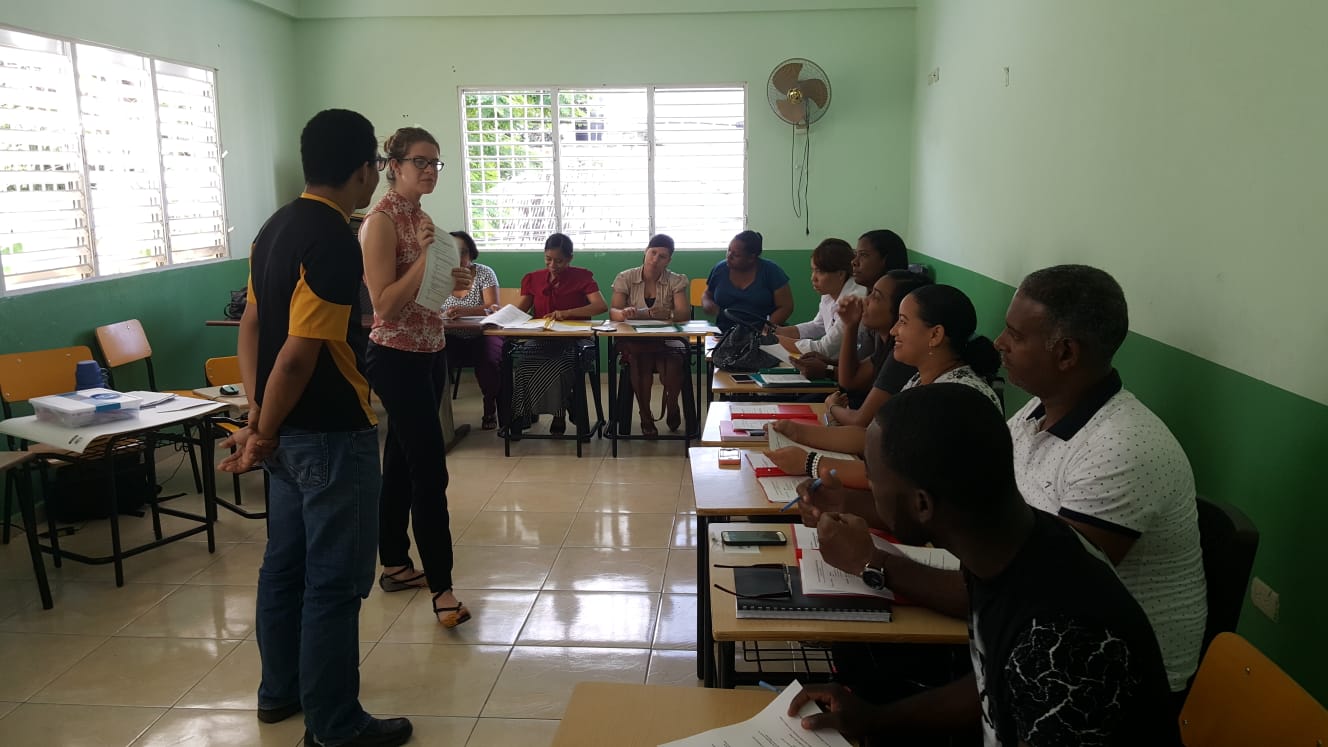
Day 1 of the sexual and reproductive health teacher training in the Dominican Republic! I led a training for ten facilitators to learn to teach HIV prevention, gender equity, consent, and how to prevent sexual assault.
The Dominican Republic is a strong Catholic country. Participants pointed out that, while their personal faith encouraged them to learn and teach sexual health and education, their church is also a space where rampant sexual abuse occurs.
One participant explained that she liked the part of the training where we emphasized the fact that women and girls have power. This is so important for preventing abuse, which is rampant in the DR. Learning to communicate, understanding consent, and knowing how to find help is crucial for young people, especially girls, to feel safe and to avoid risky situations.
Another participant: “I didn’t know there was a medicine you could take to prevent HIV before actually getting it!” (It’s called PrEP—learn more) While it’s unclear whether PrEP is available in the DR, it’s still key to know that if you think you’ve been exposed, you should talk to a health professional about your options.
Through games and activities, the participants were engaged and ready to try some sample lessons on their own.



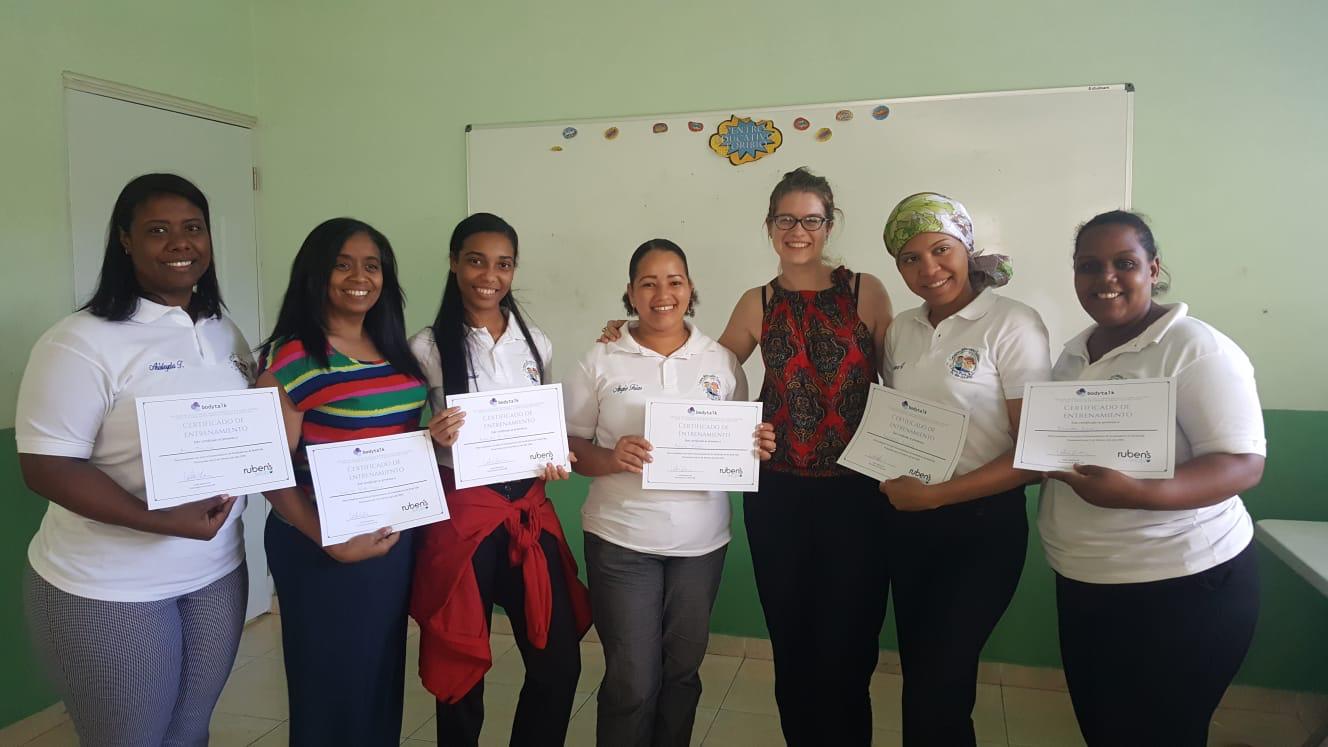
Day 2. A total of 10 teachers graduated from the program and are excited to start implementing at their school.
A brave facilitator practiced giving a condom demonstration today. A shocking number of participants, including my 22-year-old translator, had never seen a condom demonstration before. “Do all condoms really have lubricant?!” “Why is lubricant necessary?” “I never knew you were supposed to leave space at the tip of the condom!” Negotiating condom use in a country where a mere 2% of the population uses condoms is tough; learning that it’s your right to demand their use can be life changing and empowering for women.
We then discussed birth control options, some of which were familiar and some were not. Many birth control options are not available in the DR or are only available at expensive, private clinics. Demanding that restrictive governments increase access to contraception is key for women’s health and wellbeing.
One participant shared, “After the first day of training, I decided that I need to share this information with people at my church. They need to know, too. Thank you for teaching us!” Another said, “When I went home after the training, my 18-year-old niece started looking at the material and she was so interested—she couldn’t stop looking! It was good to share this information!”
We also had a meeting for the parents, to get them on board with their kids learning this invaluable information and to make sure we have permission to teach. Some parents expressed concern about “pro-sex” programs and wanted to emphasize that they teach their kids to abstain like good children should. It’s tricky explaining that with comprehensive information, kids have the ability to make better, healthier choices (which often includes delaying first sex), but by the end, the overwhelming majority wanted the program for their kids and were even asking for their older youth to participate, too.


Time to convince those parents…
Day 3. We held a workshop on reproductive health topics for a group of kids ages 12-15. What began with a room full of silence and awkward teenagers turned into an empowering space for youth to discuss consent, preventing sexual abuse, goals, and gender equality.
In the workshop, the kids passed around a menstrual pad, hot potato style, with no one wanting to touch it, while normalizing periods and discussing how men and boys can support their sisters and female family members during their periods. We practiced setting long-term goals and talked about how having a child too early can affect goals like finishing school. The kids practiced asking “Can I give you a high-5? Can I give you a hug?” and discussed how asking for consent can prevent sexual assault.
The most powerful activity was hearing the kids practice saying “no”. Unfortunately, we live in a world where 35% of women will experience sexual assault in their lifetime. The kids stood in a circle and practiced touching each other on the shoulder while saying in a strong, confident voice: “Do not touch my shoulder.” Amongst the giggles, there was the start of building confidence and understanding their rights. Having that confidence and that ownership over their bodies is so important to having healthy sexual relationships.

Testing their knowledge on puberty

Practicing consent

Practicing communication skills

Writing long-term goals

Day 4. I can’t believe it’s already the last day! Despite the chaos of starting a new class, our new facilitators pulled off their first lesson on anatomy today. Twenty-two students in grades 4 and 5 were present. The boys, being 10-year-old boys, giggled and wiggled a lot and asked why their penis is so wrinkly and why the vulva is weird. The girls were so excited to learn and asked questions nonstop, putting their new teachers to the test. The program will run for 9 weeks and will continue throughout the year.
Many thanks to Rubens Shoes for their support of this program and to Centro Educativo Toribio for their awesome teachers and kiddos! #SexEdMatters y’all.

Guess that body part for the boys


Guess that body part. “How many breasts are there again…?”

Empowering Girls to Speak Up about their Sexual Health
Blushing faces. Eyes downcast. Nervous giggles. Awkward silences. These are often how my students react when they begin a sex education class. I’ve been teaching these classes for over four years now, and whether my students are 5 or 18, boy, girl, trans or non-binary, Rwandan or American, their reactions on that first day are always the same.
Blushing faces. Eyes downcast. Nervous giggles. Awkward silences. These are often how my students react when they begin a sex education class. I’ve been teaching these classes for over four years now, and whether my students are 5 or 18, boy, girl, trans or non-binary, Rwandan or American, their reactions on that first day are always the same.
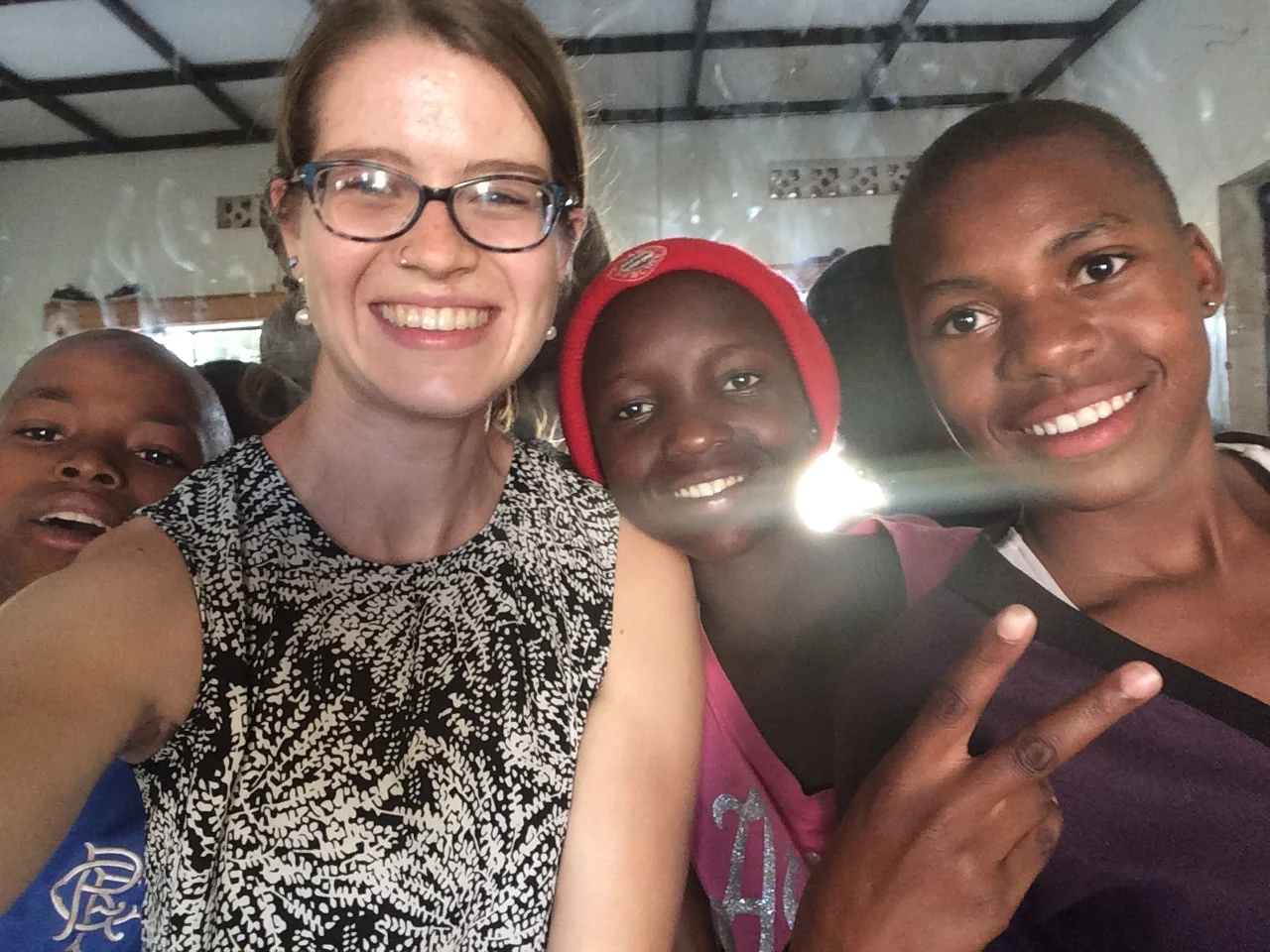
This particular class was a room of twenty Rwandan girls, ages 13 to 19, who come from vulnerable families living in the slums of Kigali. They were participants at a youth center called MindLeaps, which uses dance to develop cognitive skills and reintegrate students who have dropped out of school or are at risk of doing so. A major concern of the center was the amount of their female students who were getting pregnant and dropping out of school.
Thanks to the generosity of the Alice Rowan Swanson fellowship grant program awarded through Students for International Training (SIT), I was able to launch a comprehensive sexuality curriculum for MindLeaps, which was piloted this past April through July with a group of twenty Rwandan girls. The program emphasizes confidence building and communication skills, putting youth at the center of their sexual health and giving them the tools and confidence to make healthy, informed choices.
Read the press release from SIT which explains the purpose of my project and how I got involved in sex ed: https://www.sit.edu/welcome-to-the-sit-newsroom/press-releases/rwanda-alumna-named-rowan-swanson-fellow/
Fast forward to one of our last classes and the feel of the class is markedly different. We’re exploring communication techniques and I’m trying to teach “I Messages” (statements like “I feel angry when you ___” rather than “I hate you! You’re a horrible human!”) using role play scenarios. The first role play hilariously got the girls out of their comfort zone as it required one actor to pretend to be a six-year-old child who was constantly getting into their older sibling’s things and the older sibling had to communicate their feelings about it. The following role play depicted a young woman asking her mother for money to buy pads for the first time. The girls responded beautifully with statements like, “Mom, this feels embarrassing for me to say but I really need money to buy pads” and the mother responding in kind, “Thank you for coming to me, let’s talk about your period so you know what to expect.” Another role play—where one partner is sharing that they like the other but that person has to respond that they’re not interested in pursuing a relationship—also delivered on the “I Messages” and they went something like this:
Person 1: Hey, I like you! You’re real cute!
Person 2: That’s really sweet but I’m not interested in being your girlfriend.
Person 1: What? Why??
Person 2: I’m just not ready for a relationship right now. How about we just be friends?
Person 1: Ok, that’s cool.
[They walk off, arm in arm.]
For such generally shy, tight-lipped girls, the forwardness of their role plays and the strength of their statements were really powerful to witness. The students admitted that these conversations would definitely be harder with actual mothers and actual boys, but they’ve practiced saying the words, and the statements themselves are normalized—these are awesome steps.
Other highlights from our nine weeks together included a gender equality game, where relay teams competed in tasks stereotypically considered “women’s work.” We all had several laughs when we got the boys to try the same tasks, but the game was an effective way to jumpstart a discussion on gender equity and stereotypes.

Another highlight was seeing the increasing boldness of student questions. Through the anonymous “Question Box”, where students have a chance after each class to ask an anonymous question about sexual health, I was asked the radical-for-Rwanda question of “How can I enjoy sex without having children?” and the tricky question of “What happens when a boy impregnates you and then starts yelling at you?” These were invaluable opportunities to promote open communication, discussion of family planning, and long-term goal setting—all critical values of the program.
In August, we had the honor of showcasing the program to the famous Misty Copeland, the first African American woman to be Principal Dancer at the American Ballet Theatre. MindLeaps hosted a celebration day, where participants used dance, painting, poetry, or theater to reflect on what they learned in the program. One student presented her artwork, which depicted two women—one doing stereotypical “woman’s work” and the other working on a computer and pursuing a career. She explained that it’s important for women to have the chance to pursue their dreams and create a future for themselves. Other girls painted adult versions of themselves as leaders, professional dancers, and doctors—indicating that they’re thinking about their futures and how their sexual health choices can impact those futures.

Artwork: “When I grow up, I want to be….”

At the end of the celebration day, we presented certificates to each participant and a reusable menstrual pad kit, provided by Days for Girls and made by local Rwandan women. The partnership with Days for Girls provides our vulnerable girls with an invaluable resource, since the high cost and embarrassment of buying pads present challenges for consistent good menstrual hygiene particularly for families living in poverty.

Misty awarding reusable menstrual pads and certificates.

I have high hopes for the continued implementation and development of this program, and I feel honored to have been a part of these girls’ lives. Thank you to MindLeaps for being an amazing ally in this process, to the Alice Rowan Swanson fellowship for providing the necessary funds to launch this program, to Our Whole Lives (a comprehensive sex ed program in the US) that provided crucial support to the curriculum’s development, to Days for Girls for providing awesome and fun reusable pads, and to Misty Copeland for her promotion of this important work.
Check out this amazing video produced by Misty’s team about the event: https://www.facebook.com/mindleaps/videos/1707716406021385/UzpfSTczMzEyNTkwOToxMDE1NTk4NjQzNDEyMDkxMA/
In late September, we pilot a boys’ class covering the same material. The girls are embarrassed that their male classmates will be learning about female anatomy—“Do you have to teach them about the vagina?” “I promise ladies, you definitely want the guys to know about it. Just trust me.”—and there is talk of expanding the program to another MindLeaps center in Guinea in 2019.
Thanks again to everyone involved in launching this program and let’s continue to fight for the right of all people, regardless of age, gender, or economic status, to have access to comprehensive reproductive health education and services!