womxn • history • sex • education • social justice

Preventing Teen Pregnancy in the Dominican Republic
In Feburary 2019, I went to the Dominican Republic with Canadian charity Rubens Shoes to launch my sexual and reproductive health program “BodyTalk”. I had a blast working with the amazing teachers of Centro Educativo Toribio and watching the kids giggle while they learn about their bodies. Read my trip report below, with lots of pictures!
In Feburary 2019, I went to the Dominican Republic with Canadian charity Rubens Shoes to launch my sexual and reproductive health program “BodyTalk”. I had a blast working with the amazing teachers of Centro Educativo Toribio and watching the kids giggle while they learn about their bodies. Read my trip report below, with lots of pictures!

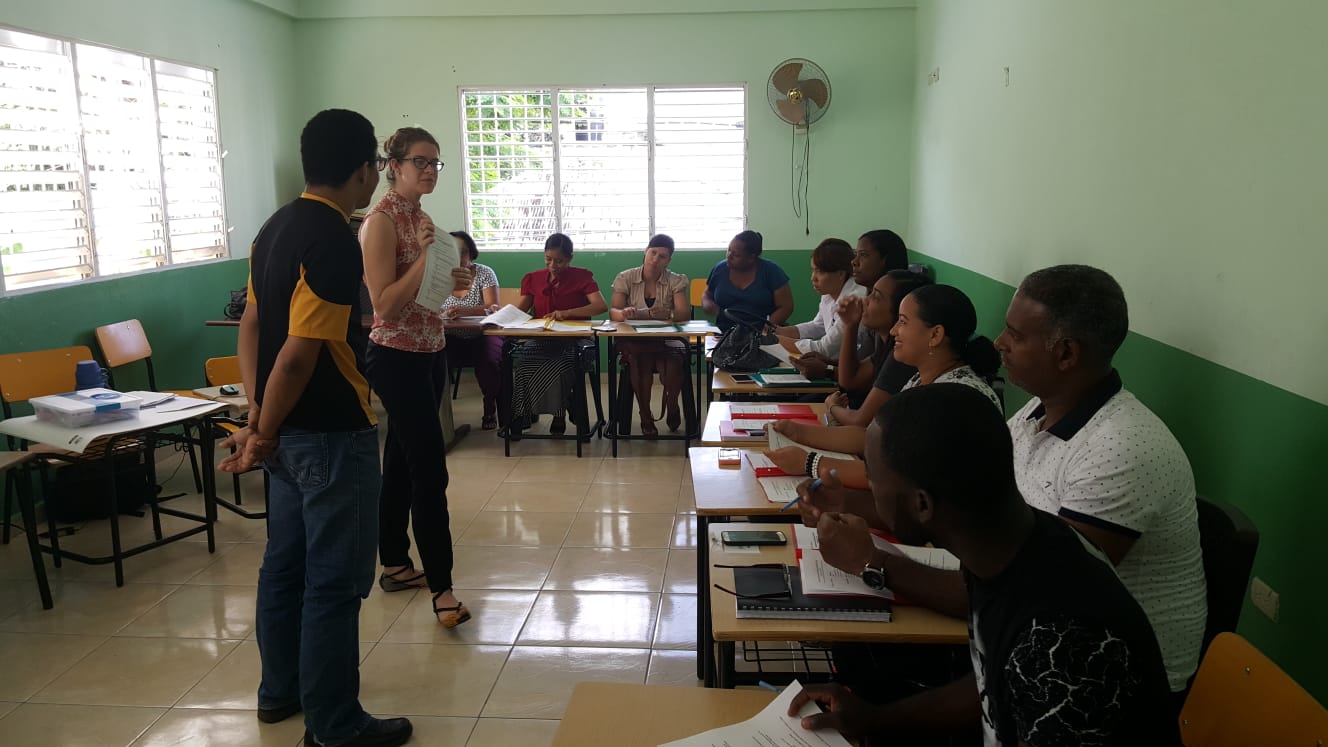
Day 1 of the sexual and reproductive health teacher training in the Dominican Republic! I led a training for ten facilitators to learn to teach HIV prevention, gender equity, consent, and how to prevent sexual assault.
The Dominican Republic is a strong Catholic country. Participants pointed out that, while their personal faith encouraged them to learn and teach sexual health and education, their church is also a space where rampant sexual abuse occurs.
One participant explained that she liked the part of the training where we emphasized the fact that women and girls have power. This is so important for preventing abuse, which is rampant in the DR. Learning to communicate, understanding consent, and knowing how to find help is crucial for young people, especially girls, to feel safe and to avoid risky situations.
Another participant: “I didn’t know there was a medicine you could take to prevent HIV before actually getting it!” (It’s called PrEP—learn more) While it’s unclear whether PrEP is available in the DR, it’s still key to know that if you think you’ve been exposed, you should talk to a health professional about your options.
Through games and activities, the participants were engaged and ready to try some sample lessons on their own.



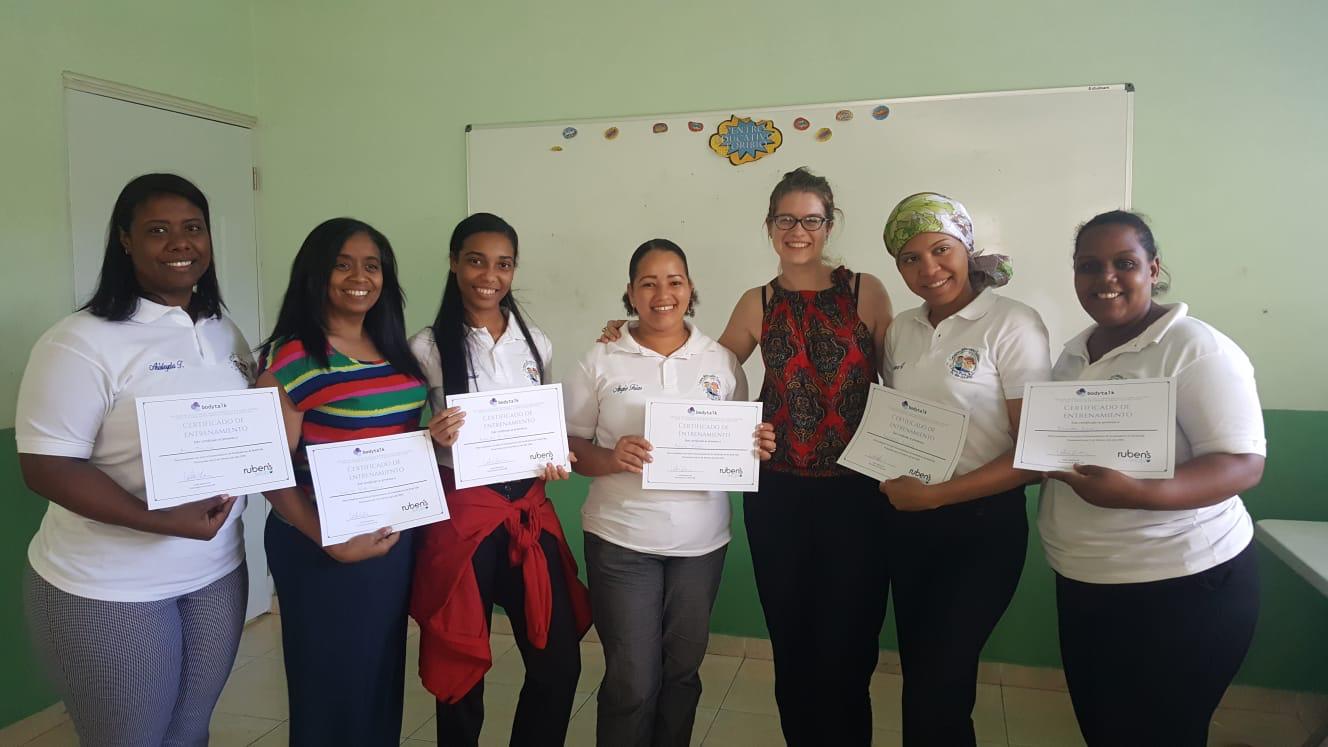
Day 2. A total of 10 teachers graduated from the program and are excited to start implementing at their school.
A brave facilitator practiced giving a condom demonstration today. A shocking number of participants, including my 22-year-old translator, had never seen a condom demonstration before. “Do all condoms really have lubricant?!” “Why is lubricant necessary?” “I never knew you were supposed to leave space at the tip of the condom!” Negotiating condom use in a country where a mere 2% of the population uses condoms is tough; learning that it’s your right to demand their use can be life changing and empowering for women.
We then discussed birth control options, some of which were familiar and some were not. Many birth control options are not available in the DR or are only available at expensive, private clinics. Demanding that restrictive governments increase access to contraception is key for women’s health and wellbeing.
One participant shared, “After the first day of training, I decided that I need to share this information with people at my church. They need to know, too. Thank you for teaching us!” Another said, “When I went home after the training, my 18-year-old niece started looking at the material and she was so interested—she couldn’t stop looking! It was good to share this information!”
We also had a meeting for the parents, to get them on board with their kids learning this invaluable information and to make sure we have permission to teach. Some parents expressed concern about “pro-sex” programs and wanted to emphasize that they teach their kids to abstain like good children should. It’s tricky explaining that with comprehensive information, kids have the ability to make better, healthier choices (which often includes delaying first sex), but by the end, the overwhelming majority wanted the program for their kids and were even asking for their older youth to participate, too.


Time to convince those parents…
Day 3. We held a workshop on reproductive health topics for a group of kids ages 12-15. What began with a room full of silence and awkward teenagers turned into an empowering space for youth to discuss consent, preventing sexual abuse, goals, and gender equality.
In the workshop, the kids passed around a menstrual pad, hot potato style, with no one wanting to touch it, while normalizing periods and discussing how men and boys can support their sisters and female family members during their periods. We practiced setting long-term goals and talked about how having a child too early can affect goals like finishing school. The kids practiced asking “Can I give you a high-5? Can I give you a hug?” and discussed how asking for consent can prevent sexual assault.
The most powerful activity was hearing the kids practice saying “no”. Unfortunately, we live in a world where 35% of women will experience sexual assault in their lifetime. The kids stood in a circle and practiced touching each other on the shoulder while saying in a strong, confident voice: “Do not touch my shoulder.” Amongst the giggles, there was the start of building confidence and understanding their rights. Having that confidence and that ownership over their bodies is so important to having healthy sexual relationships.

Testing their knowledge on puberty

Practicing consent

Practicing communication skills

Writing long-term goals

Day 4. I can’t believe it’s already the last day! Despite the chaos of starting a new class, our new facilitators pulled off their first lesson on anatomy today. Twenty-two students in grades 4 and 5 were present. The boys, being 10-year-old boys, giggled and wiggled a lot and asked why their penis is so wrinkly and why the vulva is weird. The girls were so excited to learn and asked questions nonstop, putting their new teachers to the test. The program will run for 9 weeks and will continue throughout the year.
Many thanks to Rubens Shoes for their support of this program and to Centro Educativo Toribio for their awesome teachers and kiddos! #SexEdMatters y’all.

Guess that body part for the boys


Guess that body part. “How many breasts are there again…?”


Honoring Survivors: Reframing the Post-Kavanaugh Conversation
CW: sexual assault
In the wake of Dr. Ford’s testimony and the confirmation of Brett Kavanaugh to the US Supreme Court, a lot of women are still reeling. Shock, hurt, and anger over the decision have impacted many of the women in my life and I’m sure in yours, too. It’s difficult to feel that this decision is anything but a blatant hit to women everywhere, and it makes sense that we, as women, feel a certain sense of shared anger and frustration.
But I think that some of us forget that the Kavanaugh hearings were a particularly intense time for survivors of sexual violence perhaps even more than it was for women in general. The way I’ve heard so many people, women notably, discuss the issue has been, for lack of another word, surprising. Over the past few months, I’ve engaged in many conversations about Kavanaugh and Ford and have heard comments like:
“I’ve never personally been assaulted but…”
“I know you’ve never been assaulted.”
“You’re a strong, independent woman who would never put herself in that situation.”
Or the blatant:
“Have you been assaulted?”
Hearing these statements over and over again in my conversations, I’ve come to find that there are lots of folks who don’t understand the commonplace situations that many women (and people) face that result in sexual abuse or violence. And I’ve realized that perhaps we are not as well-versed in supporting survivors of sexual violence as we may think.
Notably, for many, college is a time of sexual, social, and alcohol exploration, where misinformation and issues of consent and abuse abound. During my college experience, I had gay friends asking if they’re supposed to be using condoms like heterosexual couples since no one ever told them that protection is meant for ANY type of person, no matter their identity. I knew girlfriends giving oral sex because they said it’s “safer” than “actual sex.” Parties often had guys lurking around the edges watching women as they danced. The “hookup culture” meant that everyone was having sex with everyone else, regardless of whether they were in a relationship or not, and I was passing out information on birth control like it was candy.
With limited or nonexistent sexuality education growing up, it makes sense that many young people don’t know about safety, protection, or consent. On many (most?) college campuses, it’s not hard to be in spaces where consent isn’t recognized—how can it be if no one’s been taught?
Even if you have been taught, there are still myriad gray spaces that manifest the entrenched norms of masculine dominance and unconsensual behavior. Reading about Aziz Ansari’s case from earlier this year pointed to a lot of these gray areas: the fact that nonverbal language is often completely ignored by men in sexual situations, that it doesn’t take a blatant “no” for it to be wrong, that often women feel pressured to do certain acts due to power imbalances or the simple fear of disappointing. Girls dreaming of fairy tale romances growing into women bowing to guys’ wishes no matter what because they feel lucky to be desired. Young women “consenting” to certain activities, then ending up feeling uncomfortable, sad, and angry when they realize that their needs and wants weren’t prioritized. The fact that countless women don’t think they can have an orgasm. (which is so untrue I couldn’t help but say something).
Gender inequality still permeates our culture, manifested in these gray moments. Where consent isn’t clear. Where male desire often trumps women’s needs. Where women’s voices aren’t honored equally.
These gray spaces, not even mentioning the countless times random women get touched or catcalled by random men on the street, all point to the fact that many women have been sexually harassed, if not abused or raped. I don’t point this out to be pessimistic or cynical but to argue that the assumption that “strong, independent women” have never experienced assault is harmful and probably untrue. And to gently remind that sharing these experiences is a personal choice, one entirely owned by the survivor herself.
To be clear, no one should ever ask “Have you been sexually assaulted?” unless you’re a trained trauma worker. Framing the post-Kavanaugh conversation around personal experiences of assault fails to respect the right of survivors to share their stories if and when and how they want. Assuming that strong, independent women can’t be assaulted ignores the gray spaces that many young people (and others) face on a regular basis. How can we, as women, begin to fight for our voices to be heard when even among each other, we still fail to respect and support each other?
This is my call to everyone that we should respect and honor survivors to raise their voices if and when and how they want. We shouldn’t frame our post-Kavanaugh conversations in terms of who’s been assaulted and who hasn’t; instead we should focus on listening to and supporting each other.
Want to learn more how you can support a survivor of sexual assault? Visit RAINN for resources.